Dean's Message

How to Become a Proud, Dependable Teaching Expert

Professor YAMADA Masahiro

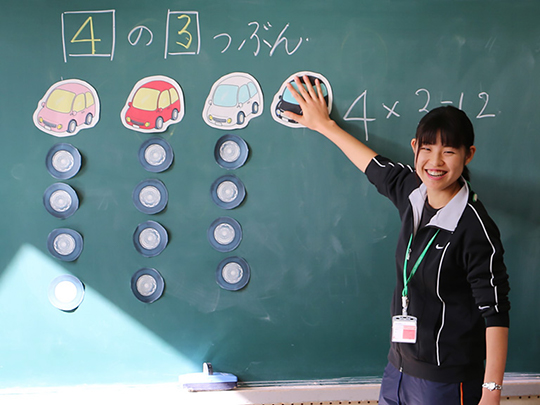
The Faculty of Education at Gifu University aims to cultivate students to become proud, competent, and sincere teaching experts who will work in elementary schools, junior high schools, and special needs schools in the future. The Faculty of Education offers students a new practical educational program called the ‘ACT1 Plan and Plus.’ As part of this program, first-year students at the faculty are sent to the schools affiliated with the Faculty of Education, which are collectively called the ‘Gifu University Faculty of Education Affiliated Compulsory School System (Elementary-Junior High).’ There, students directly engage with children as ‘teachers,’ rather than as ‘university students.’ Second-year students participate in a five-day teacher training program at the schools. In their third year, students complete the ACT Plan and Plus by engaging in a further, extended teaching practice program, where they learn how to become teaching professionals while handling day-to-day school affairs. This step-by-step, coordinated educational curriculum helps students become adept at interacting with children in a school setting. While first-year students may feel uncertain about speaking to children, as they wrap up their practical training in their third year, they are accustomed to such interactions and therefore much more confident.

School functions as a microcosm of society for children. Within this context, teachers play the roles of instructors and guides in their lives. Consequently, teachers must employ creativity to facilitate smooth and comfortable learning experiences for children. The Faculty of Education strives to empower students to actively participate in children’s school lives and encourages them to continue to learn and grow alongside their pupils.

Aspiring to Become a Highly Skilled Education Professional

The Graduate School of Education aims to cultivate highly skilled education professionals capable of addressing the diverse needs of society, playing a central role in regional education, and contributing to the enrichment of Japanese culture.
The Graduate School of Education implemented a significant reform to address the societal needs. As part of this initiative, the Graduate School for Teaching Profession was established in 2022 through the integration of multiple courses.
The Graduate School of Education comprises the ‘Teacher Education Course,’ and the ‘Course of Clinical Psychology for Education.’ There are three sub-courses in the ‘Teacher Education Course; which are as follows.

Firstly, the ‘Teaching Ability Development Course’ aims to cultivate educational professionals who can leverage their highly developed skills and knowledge of their subject, while also enhancing their instructional abilities as newly employed teachers or mid-level staff members.

Secondly, the ‘Education Practice Development Course’ aims to cultivate professionals who can utilize their knowledge to innovate, implement new ideas, enhance assessment systems in teaching, and develop practical instructional skills while accounting for individual children’s health status, level of disabilities, developmental stage, and their particular interests. It is also designed to prepare students for entry-level teaching positions or mid-level administrative staff positions, readily capable of independent and continuing study.

Thirdly, the ‘School Administrators Prepare Course’ aims to nurture education professionals who can efficiently manage school affairs, including the defining of school objectives and the formulation of administrative plans to tackle educational and operational challenges at both school and regional levels.

The ‘Course of Clinical Psychology for Education’ is tailored to train psychology specialists who can objectively evaluate complex issues encountered as they work with children at schools. These specialists will be able to draw upon their knowledge and skills to make expert assessments, based on which they can provide appropriate support for children when necessary.
Graduates of the Graduate School of Education are anticipated to assume pivotal roles in assisting with the development of education professionals within their respective regions. They are also expected to contribute significantly to the advancement of Japanese education through their educational endeavors, active participation in human resource development, collaboration with society, and contributions to society in Gifu Prefecture and the broader Tokai Region.
1) Active Collaboration Teaching

Professor YAMADA Masahiro

Dean

TOP